

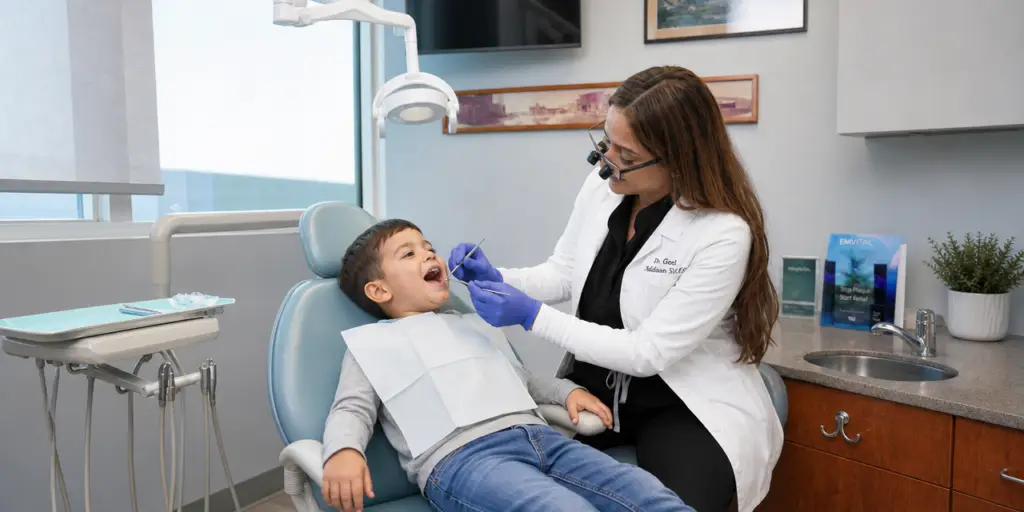
The way a child experiences their first few dental visits shapes how they feel about dental care for the rest of their life. We take that seriously. Our goal isn’t simply to clean teeth and send kids on their way — it’s to build trust, move at their pace, and make sure they leave feeling good about what just happened.
Dental anxiety in adults almost always traces back to early experiences that felt rushed, overwhelming, or frightening. We work deliberately against that pattern. Every child who comes through our door is met with patience, warmth, and a pace that belongs to them — not to the schedule.
We don’t rush through an appointment because a child is nervous. We slow down. We explain things in ways that make sense to a young person. We check in constantly. And we never proceed until a child is genuinely comfortable with the next step.
For many children, a dental visit becomes something they actually look forward to. That’s not an accident — it’s the result of consistent, caring attention from the very beginning.
We recommend that children have their first dental visit by age one or when their first tooth appears — whichever comes first. Early visits are short, simple, and focused primarily on familiarizing a child with the environment, the sounds, and the faces they’ll come to know.
Beyond that first visit, we care for:
No child is too young to start, and no child is too anxious to be welcomed here.
We never assume a child knows what to expect or that they’ll be fine once things get going. We take the time to introduce everything — the chair, the light, the instruments — before anything is used. Children are encouraged to ask questions, touch things, and take breaks when they need to.
Depending on their age and what’s needed, a visit may include:
Every visit ends with honest, clear communication to parents — what we found, what we recommend, and what to watch for at home.
Children don’t need a different kind of dentistry. They need a different kind of attention.
Our approach with young patients looks like this:
The most important thing we can do for a child’s dental health is prevent issues from developing in the first place.
Our preventive focus for young patients includes:
Catching something early in a child almost always means simpler, less invasive care — and a healthier foundation going into adulthood.
Dental anxiety is often inherited — not genetically, but experientially. Children pick up on how the adults around them feel about dental visits. If you have your own history of dental anxiety, we understand, and we’ll take care of you too.
We create an environment that feels calm for everyone in the room. There is no judgment here about past avoidance, complicated histories, or a child who is having a tough time settling. We’ve seen it all, and we know how to help.
We recommend the first visit around age one or when the first tooth comes in. These early visits are brief and gentle — they’re more about familiarity and prevention than treatment. Starting early builds comfort with the environment and gives us a baseline to track development from.
Yes — and this is one of the things we do particularly well. We work with anxious children regularly and understand that fear is real, valid, and not something to be pushed through. We slow down, explain everything, and never proceed until a child feels ready. Most anxious children leave their first visit here feeling significantly better than they expected to.
Every six months is the general recommendation for most children. Some kids with higher cavity risk or active orthodontic concerns may benefit from more frequent visits. We’ll let you know what makes sense for your child specifically.
Sealants are thin protective coatings applied to the chewing surfaces of back teeth — the areas most prone to trapping food and developing cavities. They’re quick, painless, and highly effective at preventing decay in children who are prone to cavities. We’ll recommend them based on your child’s individual risk profile, not as a routine for everyone.
Brushing twice daily with a soft toothbrush and age-appropriate fluoride toothpaste, flossing once a day, and limiting sugary drinks and snacks make a significant difference. We’ll give you specific, practical guidance at each visit based on your child’s age and what we observe. The habits built at home matter just as much as what we do in the chair.
We’ll explain exactly what’s needed, why, and what the options are — including how to make the experience as comfortable as possible. We never proceed with anything without full understanding and consent from parents, and we never rush a child into treatment they’re not ready for. For anything beyond our scope, we’ll coordinate with trusted specialists and make sure the transition is seamless.


Monday
08:00 – 18:00
Tuesday
08:00 – 18:00
Wednesday
08:00 – 18:00